Sam Earle

I’m a postdoctoral researcher at Basis Research Institute and a visiting researcher at Cornell University, working jointly with Zenna Tavares and Kevin Ellis on intrinsic motivation and procedural environment generation.
I completed my PhD in Computer Science at New York University in 2026, supervised by Professor Julian Togelius at the Game Innovation Lab.
I study open-ended learning and procedural content generation in video games.
My research interests include:
-
Using goal-conditioned reinforcement learning and quality diversity evolutionary optimization to generate video game levels.
-
Open-ended learning loops involving incremental complexification of game-like environments for training increasingly robust embodied player agents.
-
Semantically-guided procedural content generation via large pre-trained models (VLMs, LLMs, Diffusion models, Neural Radiance Fields).
You can read more about my research here.
I like AI, games, and the meta-game of building Game AI. I got my start in research by training RL agents to play SimCity. Half the fun was playing alongside the agent, poking and prodding it to see how it would react. (I noticed that bullying the agent by bulldozing key power plants would often lead it to adapt and come up with a more globally-optimal layout. We found this to sometimes be true of automated catastrophes as well.) SimCity is a basically a layer-cake of cellular automata, so I trained a (fractal) neural cellular automaton to play it. The city would grow and pulsate and rearrange itself.
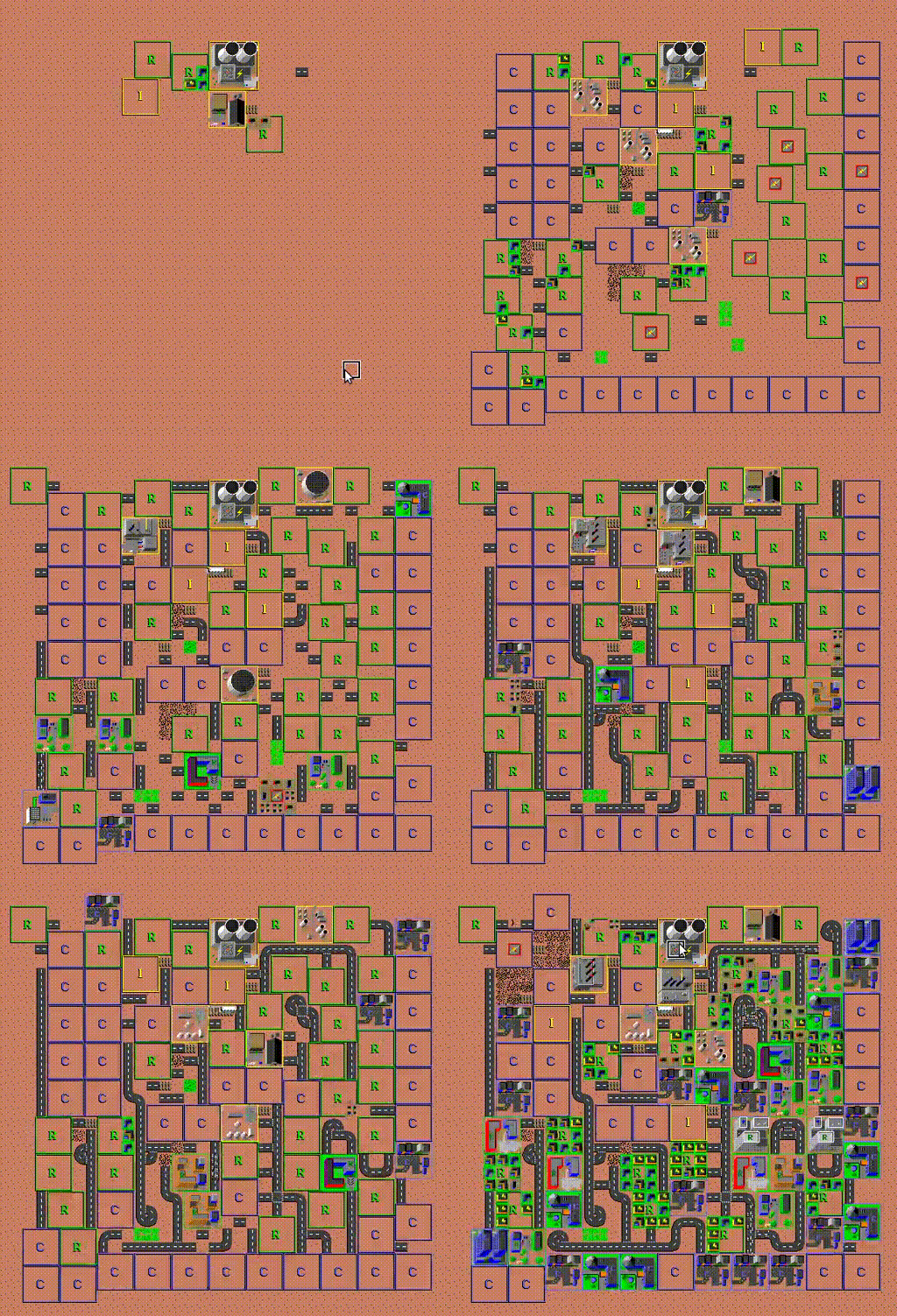
I like my games how I like my AI: emergent, self-organizing, and objective-free. I expect that in due time, some maverick designer(s) will find novel ways of using recent advances in AI to develop entirely new kinds of video games. I’m not talking merely about plugging LLMs into NPCs, though maybe this will be part of it, and certainly there is plenty of interesting ongoing work along these lines. I’m thinking more along the lines of Creatures or Black & White, in which the AI is not just “improving” some existing feature, but facilitating genuinely new forms of play.
Before working in AI & Games research, I studied Cognitive Science at the University of Toronto. Arriving at CogSci through my interest in psychology, I developed an affinity for the equal parts creative and systematic practice of building things with code. By the end of my bachelor’s, as deep neural networks began to shake the field of computer vision, I took an interest in how these networks might grow in an open-ended fashion, and how they might learn to perform symbolic computations amidst a fuzzy substrate.
I’ve made music in collaboration with new media artist Marko Cindric, often attempting to use the language and textures of code and simulation to transmute human feeling. I’ve worked as an actor. I’ve played doctors, office workers, murderous sociopaths, and a gifted-but-troubled teen Dad with a tragic past (he was also in the robotics club). I grew up in downtown Toronto in a family of thespians/sketch-comedians/improvisers.
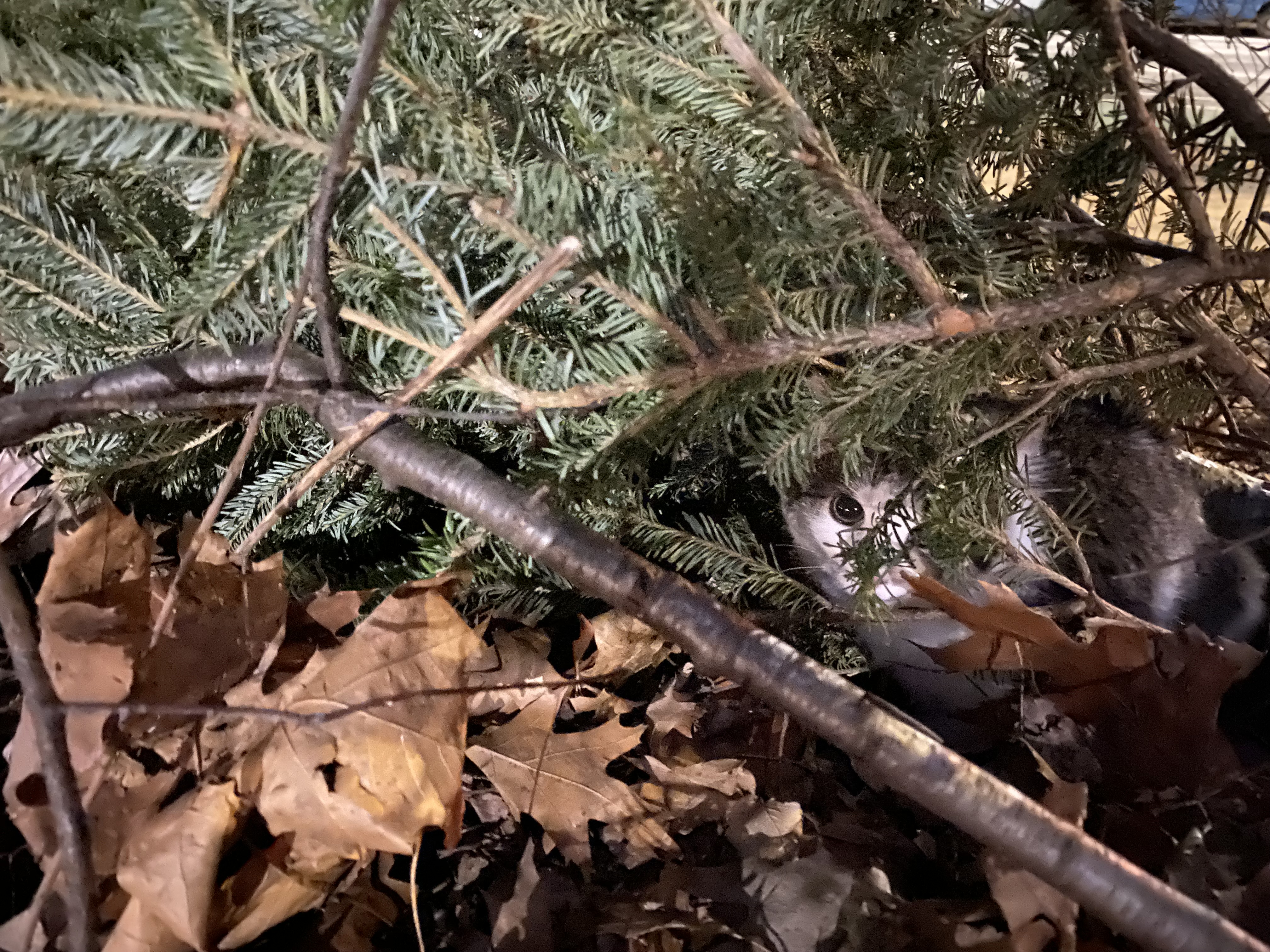
I have a cat, whom I found in Prospect Park under a discarded Christmas Tree.
news
| Nov 10, 2025 | I’ll be speaking at AIIDE 2025, presenting our work on Multi-Agent PCGRL, which is nominated for a Best Paper Award! |
|---|---|
| Oct 01, 2025 | I’ll be at ALife 2025, presenting a slice of my work on Pathfinding Neural Cellular Automata. Here’s our poster, a video explainer, and our extended abstract, which focuses on the aspect of the work in which we evolve mazes to be maximally challenging to the Pathfinding-NCA while it learns. |
| Aug 15, 2025 | I’ve started an internship at Sakana AI, working with Sebastian Risi. We’re building prototypes of open-ended evolutionary loops that use LLMs to write grammars in MarkovJunior, a rewrite-rule-based language for procedural content generation. |
| Jun 01, 2025 | I’ll be at GECCO 2025, presenting Autoverse. Here’s our poster, and a video explainer. |
| Jan 13, 2025 | I’ve found a cat under a Christmas Tree! |
selected publications
- Double Take: Intrinsically Motivating Agents to Model Many Worlds2026Submitted to ICLR
-
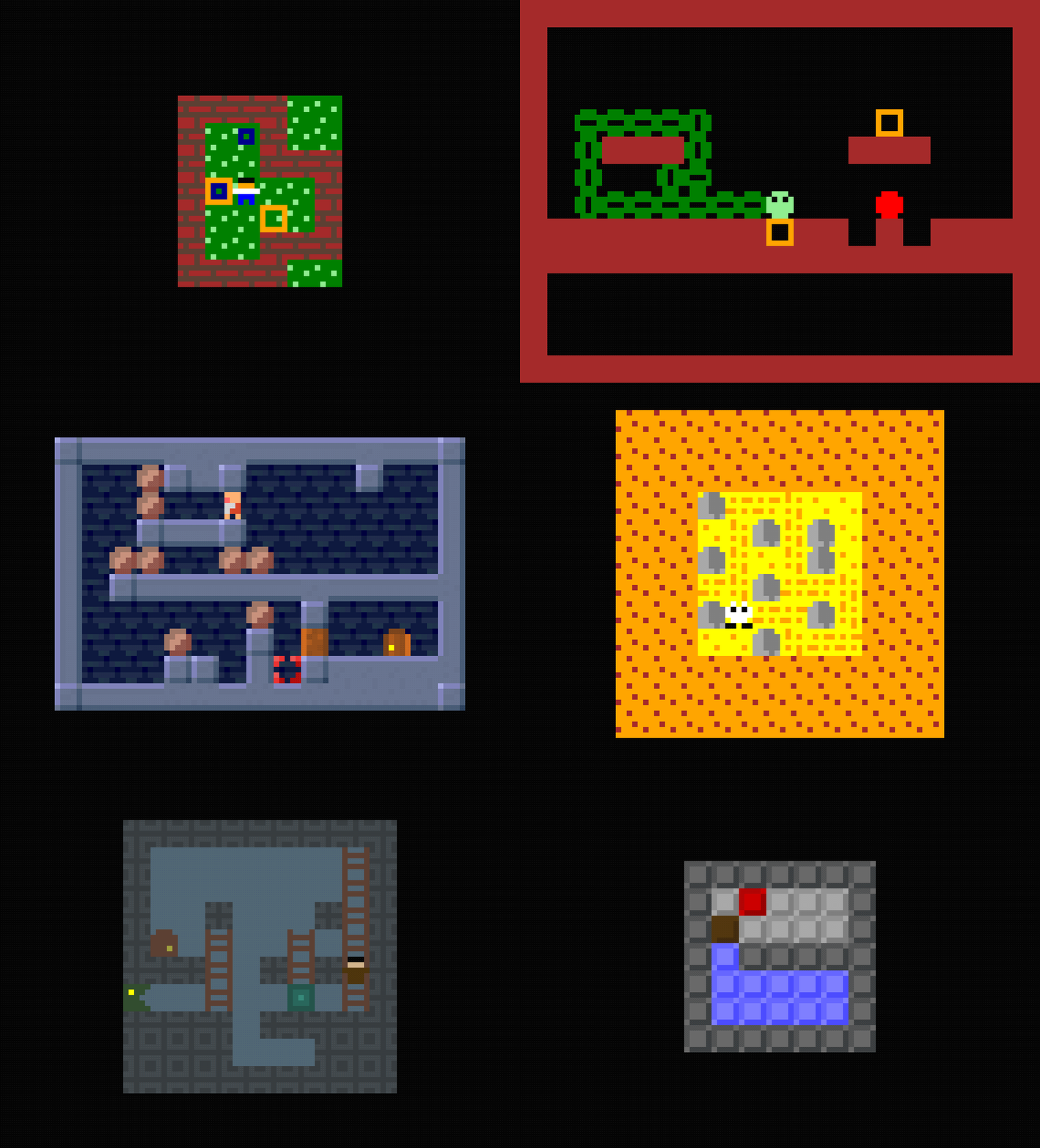 Puzzlejax: A benchmark for reasoning and learningarXiv preprint arXiv:2508.16821, 2025
 -
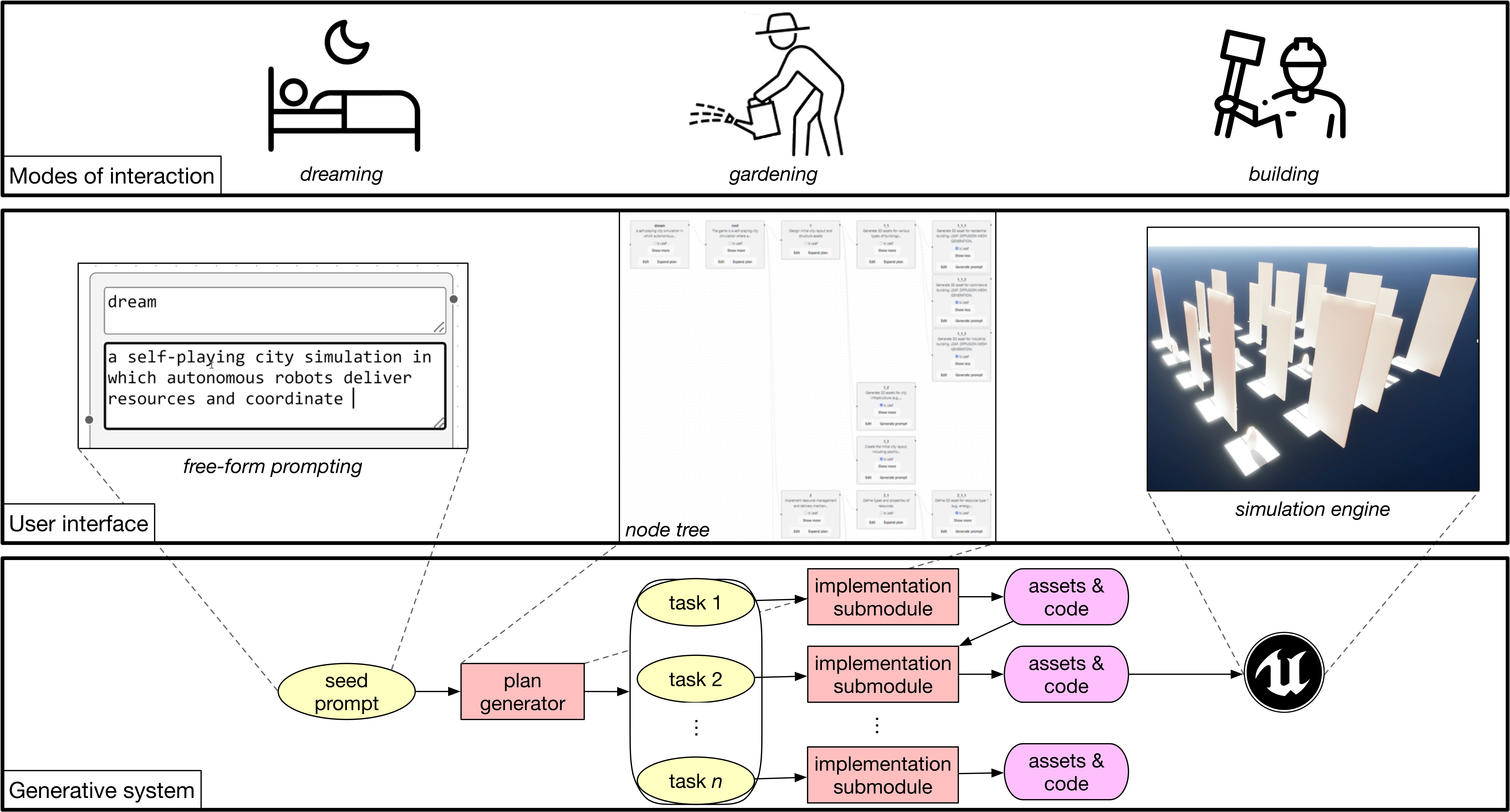 DreamGarden: A Designer Assistant for Growing Games from a Single PromptIn Proceedings of the 2025 CHI Conference on Human Factors in Computing Systems, 2025
 -
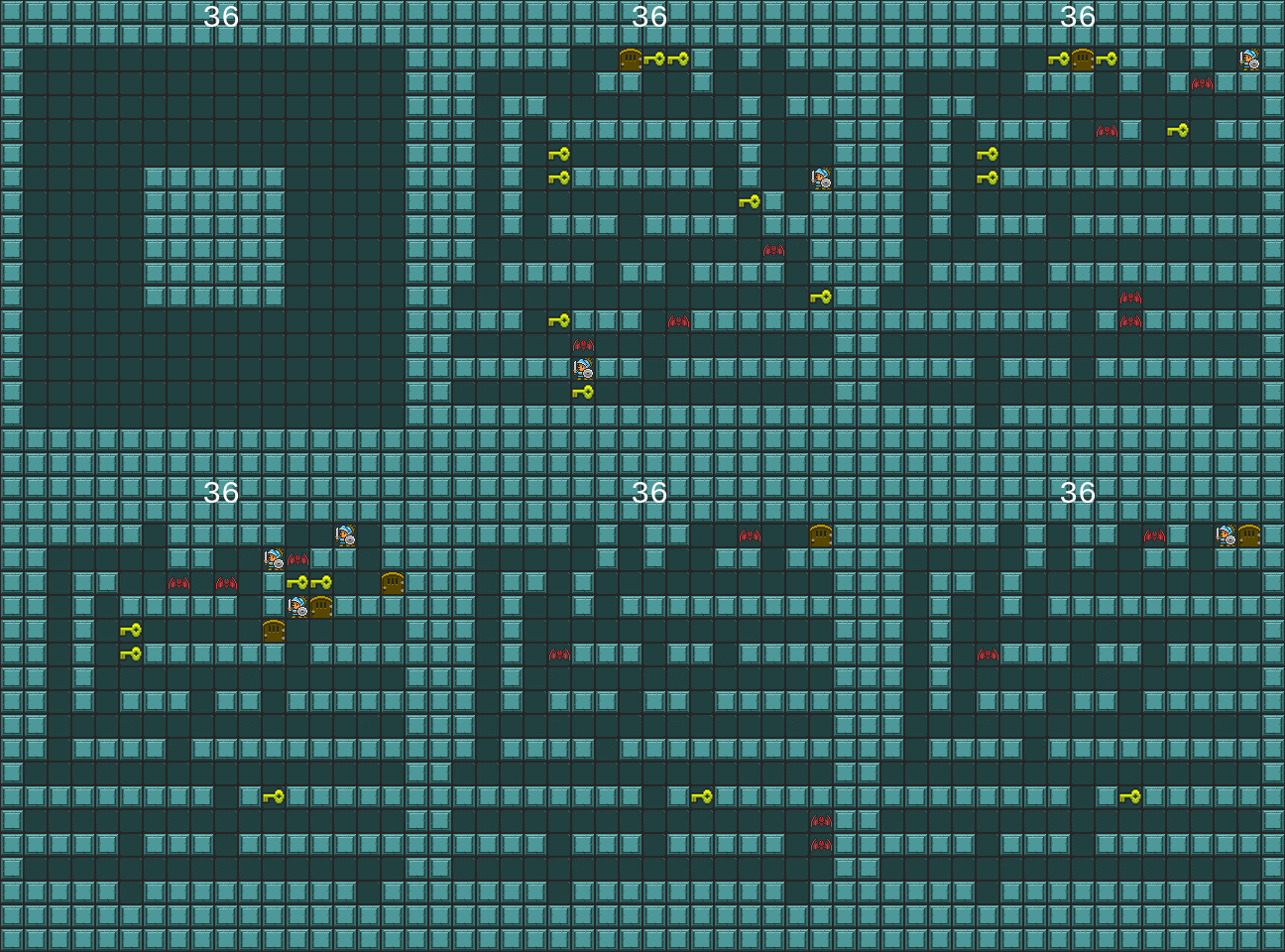 Illuminating diverse neural cellular automata for level generationIn Proceedings of the Genetic and Evolutionary Computation Conference, 2022